
• Skip to main content
  • Skip to primary sidebar

Lauren McCullough

Female Voiceover Talent

717-281-1991‬

LaurenMcCulloughVO@gmail.com

  • Home
  • About
  • Demos
    • Audiobooks
    • Book Trailers
    • Commercial
    • Corporate Narration
    • eLearning
    • Explainer
    • Medical Narration
    • Phone/On-Hold/IVR
    • Radio
    • Videogames
    • Web Video
    • Whiteboard
  • Clients
  • Contact

Health

9 Ways to Keep Moving when You Work from Home

Health

The internet age has given us the ability to telecommute, and it’s an option that seems to be growing in use by the year.  More people than ever are working from home, and it can have some serious disadvantages for your body. When you have to create a work space from scratch, or even just sit longer than you’re used to it can spawn all sorts of aches and pains. And that’s just the start! 

It can affect your digestion, sleep, and many other parts of the body. A google search turns up nearly 2 billion results for whether or not sitting is bad for you and all the reasons why. The methods for improving sitting too much are just as varied, and can range from expensive things to purchase like a standing desk to exercise equipment or workout routines. 

For healthy adults, the Department of Health and Human Services has put out these exercise guidelines: Aerobic activity. Get at least 150 minutes of moderate aerobic activity or 75 minutes of vigorous aerobic activity a week, or a combination of moderate and vigorous activity. That’s only 22 minutes a day! And if you’re working harder, it’s even less. Any significant health conditions would indicate that you should probably ask your doctor first. Stay safe everyone! 

But have no fear! There are simple alterations and additions to your routine that can have you feeling better easily and quickly. Although there’s nothing wrong with purchasing new equipment or routines you can also take advantage of things already in your home and your own body. I’m going to include a few ideas that would require a purchase, but you don’t have to take those steps if you don’t want to, and there’s always the option to substitute something you have at home. It does take more effort and attention to make the time for these things, but not only will it help your body, it’ll also help you work better and longer, and clear your mind when you may be stuck or need a refresher. 

Long hours at a desk or in front of a screen can cloud anyone’s mind, and it’s easy to get so wrapped up in what you’re doing that you forget to move away. It always seems like there’s more to do these days, and it’s a special challenge when the director of how and when to spend your time is yourself. You doubtless have outside obligations, but it’s so much easier to get distracted in a comfortable place, or when comfortable places are no great distance away. . 

I don’t need to tell you that this is particularly relevant right now. Since 2020, the number of people working from home has increased. Moving your body can help you stay fresh and work out some of the tension. 

  1. Move while sitting. This might sound a little silly, but even if you just can’t get up right now, you can still benefit your body by moving while you’re sitting. Stretch your arms and shoulders. Roll your ankles and wrists, roll your neck. Put on your favorite tunes and dance in your chair. Bend forward and stretch towards your toes. Straighten your back–you don’t need a computer hump!
  2. Take breaks. Although this doesn’t have to be regular, it can help if it is. Any kind of break is better than none, and they don’t have to be long. Get up, pace back and forth a few times. Go wash some dishes or fold some laundry. You don’t even have to finish the chore, but spending a few minutes up and around will help you go back to work in a better place, and you’ll have less chores to do later. Stretching, dancing, any kind of activity will help make sure your blood is flowing and your mind stays clear and fresh.
  3. Add good resistance. Some small purchases can really help make your everyday movements around the house better for your body. Wrist and ankle weights can be purchased at a number of different configurations and weights, and for whatever time you wear them, you’re giving your muscles a bit of extra workout. Even 1-3 pounds can add up over the course of a few hours. It might take a bit of searching to find something comfortable enough to wear for a while, but there’s plenty of options to choose from. There’s also grip strengtheners, or resistance bands that can be used for a seated bit of exercise, or in addition to your other items.

  4. Get outside. It can be hard to make yourself get out of the house, but it can do so much good to get a breath of fresh air and feel a little sun on your face. It’s a fantastic way to push the hard reset on your brain, and you don’t even have to go that far. A turn around the block can be good enough, but don’t hold yourself back from walking longer if you’re really feeling restless. If you have a deadline, settling your mind will make you work better than you might otherwise. 
  5. Standing Desk / Desk Treadmill & Bike. This is definitely the most expensive option out there, but could be worth the long term investment. There are lots of standing desk options out there these days, along with under the desk treadmills and “bike” units. If you know that taking a break away from your desk won’t really work for you, these are certainly avenues to consider. Personally, I’ve had a standing desk for about years, and thinks it’s incredibly useful to be able to change from sitting to standing throughout the day.
  6. Get online. There are so many workouts available on youtube and many other places for free, and there is so much variety that you can find any kind to suit your tastes. From yoga to weights to using any sort of exercise equipment there’s a ton out there to help and support. One excellent quick, and free yoga option, is YOGA WITH ADRIENE.
  7. Find a buddy. It’s so much easier to get moving when you have someone to help motivate you! If you can find a friend (or any number, group stuff is cool too!) you guys can check up on each other and make sure that you’re not slacking and nothing’s holding you back. And they can also encourage you if you miss a day and help you stay on track.
  8. Stretch. Working yourself through full body stretches is a great way to warm up your muscles and get your blood moving without moving far at all. You don’t have to stretch like some yoga guru to do good things for your body. But to be safe, do a little jog in place for a minute or two or dance around a bit to warm yourself up so that your muscles aren’t completely cold when you start. You don’t want to pull a muscle!  Work from your head and neck, to your shoulders, elbows and wrists. Twist from side to side, and then bend at the waist. There’s lots of diagrams and instructions of great poses to help with this online, but be sure and hold your stretch for 10-30 seconds to help make sure the muscle warms up all the way.
  9. Put things away. Not everyone will find this one useful, but if you’re anything like me, putting away the clutter helps me stay productive. We all have a lot of stuff, and it’s easy for things to get rearranged and left lying out through our busy lives. Walk around your house and look for things you can put back, whether it’s a book, a box from the pantry, your headphones or charger cable, or what have you. Your future self will thank you when you can find what you need when you’re wanting it later!
What is vocal fry?

Health

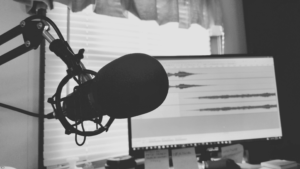
What’s creaking and crackling throughout people’s voices these days? It’s vocal fry! It’s not a new phenomenon, but lots of famous folks are dropping the pitch of their voices and allowing the bottom pitches of your voice to dominate, producing a creaky, breathy, raspy voice. 

When we speak, our vocal folds typically close. When we breathe, they stay open and relaxed. Vocal fry is created by relaxing your vocal folds, and not increasing the amount of air coming out as you speak, resulting in lower pitched vibrations. It can occur both throughout someone’s speech, or more heavily at the end of sentences. 

This phenomenon has been described in vocal pedagogy literature for some time, but has only entered the common lexicon in the 1970’s. (It was first primarily noted for singers.) In more recent decades, the phenomenon spread in popular imagination due to several famous figures, such as Kim Kardashian and Katy Perry, using it. Like many things coming into fashion, it’s been decried in countless articles, and has been referred to as everything from hurting your chances of getting a job, to a ‘linguistic tic of doom.’ Despite this flamboyant phrase, as mentioned earlier, this is in no way a new thing. 

There are many factors that lead into how we perceive vocal fry. It’s often considered to be a female phenomenon, but it’s perhaps more noticeable in women due to the fact that their voices are not naturally at such a low pitch. And many people consider it annoying, but it’s not uncommon for women’s voices to be under more scrutiny than men’s. In an NPR Article, Dr. Penny Eckert discusses how although women are often criticized for this sound, it is equally often used by men, especially in a historical context. And like many trends in speech, it is currently being noticed strongly, just like upspeak or valley girl was a couple decades ago. Despite the vocal rhetoric, there’s no concrete evidence that the occurrence of vocal fry has substantially increased over the past couple of decades. It’s worth wondering why we so often feel the need to regulate and scrutinize women’s voices in particular. Many male figures like Noam Chomsky use vocal fry heavily, but people don’t generally complain about his voice. 

Anyone who doesn’t care for a vocal fry sound in their voice, they can see a speech pathologist to help train it away. The strong feelings some people have about the vocal fry speech pattern can cause difficulty. This is particularly potential in professional settings where the way you speak can come under scrutiny. The perception that people who use vocal fry sound ditzy or grating can be a harmful one in some areas of life. The speech pathologist can train you to use your throat muscles and vocal folks in concert to produce a stronger and more powerful vocal tone.

Don’t worry about vocal fry affecting your voice health though. Although any habit can become an affectation, the mechanism itself won’t hurt your voice. However, if you are experiencing persistent vocal roughness, you may want to schedule an exam to rule out some possible medical issues that can produce the sounds associated with vocal fry. But other than that, unless you don’t care for the tone it’s nothing to worry about. 

If you’ve got some fry in your voice, don’t let the naysayers get you down, and speak how suits you best. There’s ways to deal with it if it’s a problem, but it’s no more a societal ill than any other “new” way young people have spoken throughout the centuries of human history.

Eye Health as a Voiceover Talent

Health

Eye health and voiceover? Probably not the first thing you’d think of when considering possible health problems in our profession. We’ve all shared the best throat remedies, or methods to help your sinus issues clear up ASAP, and wondered if that rasp you picked up could land you one of those vocal fry/millennial things that’s all the rage. There’s throat coat tea, a thousand kinds of cough drop, and a dozen other remedies we’ve all shared for throat health and reducing mouth noise, not to mention keeping yourself hydrated. But who thinks about eyes? 

Turns out you should be. Screens are a part of life in general, from phones to TVs to tablets for every sort of person, but in voiceover we all spend a great deal of additional time between recording and editing, not to mention dealing with all the clerical and bookkeeping work that is part of running a business. We all have heard about how bad sitting for long periods can be, well the eyes are another major part of the body that deserves some TLC. Staring at a computer for long hours can cause eyestrain and all kinds of associated problems, and although eyestrain can go away after a while, how many of us go from work to a relaxing TV show? Or staring at a book? Just as it’s true for the rest of your body that it’s a good idea to vary your activities to make sure you don’t harm yourself over the long term, the eyes are the same way. It’s important to take time to vary what you’re pointing them at, and to take breaks just like you would for recording long form. If you think about it, most of us use our eyes even more than our voices, since for everything we record, the editing, billing, file transfer, and all the numerous emails are an attached part of the process. 

Below are nine tips that will help you keep your eyes as healthy and happy as the rest of you. These tips will help you make sure that this vital part of your body doesn’t hold you back from whatever jobs you may have come in! 

  1. Moisturize those eyes– Long hours of computer use make people tend to blink less. One way to combat this is to grab some eye drops to help make sure that sensitive tissue doesn’t get dry and uncomfortable. If you have contacts, you’re probably already familiar with how useful these can be, but otherwise, some artificial tears can really help your eyes feel better. If you have any questions, a consultation with your doctor can help you find the best brand and type.
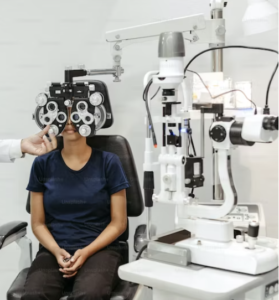
  2. Don’t rub too much– I think most people have heard this before, but it’s such a natural gesture I wanted to make sure and reiterated it here. It’s normal to want to do that, and boy does it feel good! Rubbing your eye can stimulate the vagus nerve which lowers your heart rate and decreases stress, and can also stimulate the production of tears. But on the flipside, if there’s anything in your eye, you can cause tears in your cornea or scratches on your eye that can lead to infection. It’s also important to remember that your hands are the most germ laden part of your body, and it’s very easy to let germs into you in that way. Lastly, you can also cause the tiny capillaries in your eyes to burst, increasing the bloodshot aspect of your eyes. (If you have eye conditions already, there are even more dangers here for you, be careful!) 
  3. Make your monitor match– Make sure that whatever text you are reading from is an easy size to read, and that your monitor settings are a good level for your comfort. This is especially true if you’re working on longer material like elearning or an audiobook. Don’t forget you can change color, text size, brightness and many other things to find the most comfortable way to read what you need to.
  4. Take eye breaks- The Mayo Clinic recommends the 20-20-20 rule if you work on a computer for long periods of time. Every 20 minutes, stare at something at least 20 feet away for 20 seconds. 
  5. Exercise those eyes– another way to combat eye strain is to exercise your eye muscles. Move your eyes in a figure eight shape, up and down, and then side to side. Take your fingertips and gently rub the muscles around your eyes. 
  6. Light it up– make sure that your lighting setup in your booth and your work space in general doesn’t have a lot of glare, or lighting that’s at a bunch of different levels. If you read from printed material, make sure you have a good light coming from behind you to shine on the paper, and if you are reading from a screen, like I said above make sure your light levels aren’t bugging your eyes. 
  7. Blink– take actual blinking breaks, and remind yourself to do so whenever you can. I know I mentioned that above, but it’s an important element to make part of your routine. 
  8. Master your flow– the airflow in your workplace is an important element to consider. This is yet another thing that can dry out your eyes and increase eyestrain. Make sure there’s nothing blowing directly in your face, and consider using a humidifier if needed to make sure that your eyes stay healthy. (Obviously not in a booth, but in your office, or a space you take breaks to, for example.) 
  9. Get eyewear with care– if you wear glasses or contacts, the Mayo Clinic recommends talking to your doctor about considering lenses that are specifically intended for frequent computer use. There also are a considerable array of lenses designed to block out the blue light spectrum that comes from every kind of screen we stare at. The American Academy of Optometrists says that they are not needed, but a writer for Good Housekeeping mentions that they provided other benefits, such as making her more aware of screen time in general. For a long time I wore lenses that filtered out blue light, even before I started to need a prescription for astigmatism and it helped a great deal with eye fatigue and headaches.

The single best thing you can do to help your eyes stay healthy is reduce the amount of time that you are looking at a screen.

So much of our entertainment these days is digital, so when you can, find alternative things to do after your work day. Take a walk, read a book (or better yet, LISTEN to one), and of course spend some time with loved ones which will give your eyes a chance to take a break and relax along with the rest of you.

As for blue lights, which reduce the production of melatonin at night, both Apple and Android phones have settings to turn off blue light, both when you choose to or on a set schedule. Before this feature became available I also used a free program called fl.ux to help control the blue light levels on my computer. This is also a great tip for your family and loved ones, since screen time is so much a part of all our lives these days.

All in all, be thoughtful about your screen intake, turn off your blue lights at night, and take time to rest your eyes, and you’ll be as eye healthy as you can possibly be. 

Balancing Work from Home Life

Health

Balancing home and work life in this pandemic can be a struggle. So many of us transitioned to working from home, quite literally overnight, and even as things have changed and things have started to re-open, the impact of this new normal means many of us continue working from home, either full-time or occasionally. We have shifted our thinking from telecommuting as a perk to a necessity for many people. At the very least, we may need to always have that option for times when we or our families aren’t feeling well or another flu or disease breaks out. Now that we know that we CAN, and sometimes should, work from home, it is likely to be a more common feature of our professional lives. 

So what does that mean for work-life balance? Yet another perk that’s become a fixture. We used to talk about work-life balance as a sort of idealism that companies or situations offered. You would choose a certain circumstance because it provided work-life balance. 

But now, work-life balance isn’t just a nicety. It’s a necessity. Because our physical work and home lives are quite interwoven. 

As a voice over talent, I’ve been balancing work and home life for over a decade now. I’ve had a home studio since the earliest days of my career. And as my personal life changed, from a single woman living on her own, to a newly married couple, to a mom, I’ve welcomed more people into my home and by extension my work space. I’ve learned a lot about working from home and balancing all those aspects and I have some tips that may help you as you start to settle into this new way of doing life. 

What Does Work-Life Balance Mean? 

Let’s take a moment and talk about what work-life balance means. As I define it, work-life balance is about your health as you juggle the responsibilities, challenges, joys, and weights of both your professional and personal lives. That health is not only your physical health, but also and especially your mental health as well. To do that, you need to be able to create space that allows you to make the most of both of those realms and to enjoy them for what they are. 

Prioritizing Work and Home Life As You Balance

Although we often use the word “balance” to describe this struggle, it may not actually describe it well. It isn’t as though we are using a scale with fifty percent on each side. In order to do our best in each arena, we need to be able to prioritize each. This means giving each realm the time and physical space  they deserve.

Making Work A Priority From Home

  1. The first step is seemingly the easiest, but we all are guilty of neglecting it. Set up a designated space to work. It may be a room all to itself. As a voice over actor, for me that means a studio. Maybe you don’t need a whole studio or maybe you don’t have a room to set aside just for work. That’s okay. A closet, a desk, a corner. Anything that can be distinct from other spaces. Make it a habit to use that work space, and not your bed, your couch, the table where you eat, etc. You need to be able to walk away from your work, and preferably to shut a door behind you too. 
  2. Keep a schedule- and stick to it. This one is hard too. With laptops and mobile devices, work can easily meld into all times of the day, and night. But keeping time distinct is an important factor in maintaining balance, so you won’t feel like you are constantly working. Set office hours and publish them. Make sure your colleagues, and your loved ones, know when you are available and when you aren’t. 
  3. And here’s maybe the hardest one of them all. Get dressed for work. We’ve all heard the stories of the new pandemic work clothes, and the horror stories of Zoom meetings gone awry. As professionals, even when working from home, we owe it to ourselves to dress the part. I’m not saying we need to dress to the nines every day. However, putting together an “office wardrobe” can really help. Then you can put on when you go into work, and then change out of when you’re ready to play on the floor with the kids or go work in the garden. It’s a visual cue to everyone about what’s happening next.

Making Home A Priority 

An equally important distinction is setting time and space aside for home life. It’s easy to just keep checking emails, writing one more report, or processing one more invoice. But pretty soon, those little moments here and there creep into every hour of your day. 

  • If you have a family or friends that you live with, make time for them. Time that doesn’t involve a screen or your distractions. Of course, they deserve it. That goes without saying. But the truth is that you deserve it too. And you need it. You will work better and be better. 
  • Have conversations regularly about what everyone in the home needs, as far as time and space. Be respectful of everyone’s concerns and requirements. And continue to return to those conversations to discuss what is working – and what isn’t.

Physical Health and Mental Health

In light of a global pandemic, our attention is turned to our health and the health of those around us. Balancing our work and home lives can have a direct impact on those factors. When we are taking time away from work, we have time to focus on our health. We can take a deep breath, get some exercise, shop for and eat healthy meals, and laugh more. These are as critical as getting another hour of work in. And especially when there are viruses going around, it’s important that we keep our health up as much as we can, for the sake of everyone around us. 

Enjoy The Benefits Of Working From Home

As with anything, there are pros and cons to working from home, but for me, I see a lot of benefits in being in your own space and having some flexibility. As best you can, try to enjoy the advantages of home life. Take a walk around the neighborhood on your breaks, or even take a walk meeting if it’s practical. Step out of the office space and work outside when weather permits. 

Overall, just give yourself, and those working and schooling at home with you, some grace. It can be an adjustment for everyone and learning what works for you may take some time. Try something new, adjust and find the perfect schedule and set up that allow you to prioritize your work and home life with balance, efficiency, good health, and joy. 

Setting Boundaries when working from home

Business, Health

2020 was a year that put millions of people on their couches. Lots of people lost their jobs, but many others found themselves working from home. Settling into new work routines was incredibly challenging for lots of people. Kids were home when they wouldn’t usually be, childcare was either unavailable or closed, and many of the usual resources of home and family life were not around. Parents often, in addition to whatever regular jobs they had, also had to supervise school for their children. 

Now, many folks are back in their original offices. But some companies are taking another look at allowing people to work from home. There’s tons of articles on every aspect of office life, but there’s a strong element that often gets left out of working-from-home tips. Boundaries.

When you travel to an office location and leave at the end of your work day, there is a very clear line between ‘work’ and ‘home’. Even if you take calls or answer emails when you’re away from your job, most of your attention is still on the ‘home’ side of the ledger. Working from home can make you feel very unsettled. Your concentration isn’t as good for your job, and your kids and spouse feel like they’re not getting the normal amount of attention. Before the arguments and hurt feelings come into play, set some boundaries to make everyone as happy as can be. Plus, once you set your boundaries, you’re giving your family a clear exchange. If they give you this time, and this space, the rest of the time you’ll be available. 

Lean into routine

Make sure you allow yourself adjustment time as you move into a home work space. Human beings are very much creatures of routine, and no matter how careful you are in creating your new environment, it’s not what you had in the past. Allow yourself to settle in, take a look at what you’re doing and see if it’s working for you. Maybe you need to rearrange things. That can mean everything from an order of tasks to the set up of your workstation. Anything and everything can be the key to making you more comfortable and setting up right. Your family and pets may need some adjustment time as well. If they’re not used to having you in reach, they may take some time to understand that they need to give you space during your working hours. 

Designated Work Space 

Whatever this looks like for you, during work hours this is your space. It’s tempting to work from a couch or other sort of comfy furniture, but this can be a trap. Your mind and body associate the couch with relaxation, so the confused signals can make it very difficult for you to work at a good pace. There’s nothing wrong with being comfortable, but don’t let it throw you off. Try to find a table or other space that isn’t paired in your mind with Netflix binges. A kitchen table or counter, or perhaps a basement space, or other area that you don’t spend most of your home time in. Don’t go too far the other way either. If you’re not comfortable wherever you’re working, things will be harder as well. Make sure that you have good lighting and ventilation, an internet connection if you need one all the time. If you don’t have a good space all the time at home, you can also work mobile if needed. Many popular restaurants have wifi these days, and stepping outside the house can be a nice break if you’re feeling a little cabin fever. Remember that there are no real limitations on the way you can work, as long as you’re getting everything done and not harming yourself. 

Set Work hours

This may seem like a pretty silly thing for you to worry about, but it’s important. We’ve all had that one project that’s taken longer than we expected, or a client ask you want to be sure and get back to them as soon as possible. It’s a completely understandable desire, and you should of course do your best for them. But, it’s also completely possible for your job to consume your life and burn you out. One work hour one day, leads to two hours the next day, and so on. That’s less time away from the job and with your family or friends. Without this critical boundary, it’s very easy to find yourself right back to the arguments I mentioned earlier. Your mental and emotional health are a critical part of doing well at your job. The more ‘job creep’ you experience, the easier it is to get far out of balance, and make yourself very unhappy. If you’re used to long hours in a regular office, remember that working from home gives you the opportunity to start anew and make healthier choices that will make you better at your job. And better for your loved ones and personal life as well. 

Quitting Time and Weekends Off

Depending on your industry, this can sound like a very foreign idea. Sometimes people want you to be on call 24/7, and that’s neither healthy nor necessary. Or maybe you’re just used to being always available. Quitting time dovetails with the idea of having business hours above, but it’s most important for you, rather than the people you work with. When projects stretch long, or it’s been a day with distractions, it’s very easy to keep working on into the night. Many people will feel that they have to finish a project completely before they can stop. Or they have to reach a certain point, or perhaps even that they “might as well’. Well, don’t! Stick to your quitting time even if you don’t want to. Forcing yourself to have a defined end to your day is better for you and your home life, as well as making sure that you can go back to work tomorrow in a better head space. And when it comes to weekends off, this is doubly true. Many people these days don’t have much time or energy for cleaning or chores on the weekday. It’s totally understandable the rise in meal kits and food delivery has paralleled these trends. Make sure you cordon off your weekends for time full of whatever you need to do away from work. You can create exceptions if you want to for these situations, but make sure that you do it cautiously. 

Self Care is essential

Working from home is both a blessing and a challenge. In addition to the above boundary ideas, make sure that you also give yourself a little time away from the desk. Walk around the block every so often, or at the very least give yourself a good stretch and shake out your limbs. Sitting down for too long isn’t very good for your body, and a little shake up will keep you alert and working for longer. Stay hydrated, and don’t be afraid to think outside the box when coming up with your perfect work space. Discipline is at the heart of any good work, and creating boundaries for your work life are a great exercise that can make your whole life better.

Tips For Vocal Health, Including Beating A Sore Throat

Health

Tips For Vocal Health, Including Beating A Sore Throat

This time of year, who couldn’t use some tips for vocal health? As a voice talent, maintaining vocal health is pretty fundamental to my everyday life. Winter and Spring can be brutal on my vocal health, with the cold air and the germs flying about to early Spring allergies. But really anytime of year, as a voice actress, my voice can become overused and exhausted. I need to keep my throat healthy and ready for the next studio session. 

Even if you aren’t a voice talent, you may be surprised to find yourself with voice fatigue. Sore throats and vocal fatigue can impact anyone – moms and dads talking to their kids all day, professionals giving presentations, teachers and professors, coaches yelling from the sidelines, singers and musicians. You may not think of yourself as a vocal professional, but you probably use your voice more than you think. And voices that are overused can become stressed and 


Why Vocal Rest Is Key

Vocal rest is really the best tip I can offer to maintain your vocal health. No matter what you do for a living, when that vocal exhaustion kicks in, it’s time to give it a rest. 

We don’t need to get into all the science behind your voice, but basically the vocal cords, and muscles that control them, are susceptible to overexertion and stress. With constant overuse, vocal tissue can suffer damage. That’s why rest is crucial. 

If you are a voice performer, or use your voice professionally all day, you must stop periodically and just give your voice a break. That’s right. Sometimes, you need to just stop talking for a while. Another tip is to give yourself a periodic day “off” from using your voice. You may not be able to avoid talking all day, but not using it professionally and allowing yourself some quiet time will give your voice the rest it needs. 


What To Do When A Sore Throat Hits

Sometimes, as much as you work to protect your voice, a sore throat can still strike. Then what? As mentioned above, your voice needs rest. When your throat hurts, give it a break. Stop recording or speaking professionally for a time, if you can. When you take time to give your voice a break, take the time also to give your body a rest. 

But just resting isn’t always an option. Sometimes you need to take care of your vocal cords and heal up quickly, especially if others are relying on your voice talent. If you are suffering from a common cold or struggling with dry, cold air, you can take steps to soothe your throat and get back to work. There are two ways to approach healing your voice:

Coat Your Throat

When your throat is dry and irritated, you can soothe it with a coating of comfort. Through a variety of ingredients, they relax your vocal cords and offer relief. Options are limitless on the market, but I have a few tried and true favorites. Instead of the hundreds of chemical or sugar loaded cough drops on the market, I recommend the VocalZone pastilles. Their all-natural, vegan ingredients provide that soothing relief, and also tackle the mucus and sinus issues that accompany throat discomfort.

While we are on the throat coat topic, we have to talk about throat coating teas. Years ago, I would have said that I wasn’t a fan of these types of teas. Their distinctive herbal ingredients can have strong aromas and flavors that range from grassy to menthol. However, I recently found that my taste buds may have changed and they are very pleasant to me now. It’s a welcome discovery, as I use my voice for clients daily. Here’s a video from my YouTube channel to learn more about my favorite voice coating teas. 

Clear Your Sinuses

Sometimes, excess mucus in your throat accompanies or is the cause of your voice irritation. It may be a rather uncomfortable topic, but keeping your voice healthy means regulating the mucus build up in your sinuses and throat. The VocalZone lozenges mentioned above can provide this kind of support. In addition, you may want to consider the use of a neti pot for vocal health, especially if you’re experiencing sinus blockage or dripping into your throat. Post-nasal drip is a huge factor in throat irritation.

Avoid Overexerting Your Voice

When you are looking for cough drops, lozenges, and other medication to address a sore throat and irritation, make sure to avoid products that promise to numb your voice. You don’t want to just turn off the pain and move on with speaking. Numbing your voice means that you will not be able to feel your body’s natural message to slow down and take a break. And in the worst case, it will mean turning off the cue to stop when your vocal cords are damaged and inevitably in pain. 

Avoid the habit of clearing your throat or rough coughing throughout the day. This can be difficult in dry, cold air, but breaking the habit of the putting additional stress on your vocal cords can keep them from unnecessary strain. 

Preventing A Sore Throat

It’s true that an ounce of prevention is worth a pound of cure. In other words, take care of your vocal health before a problem pops up. As we talked about before, rest is best. 

If you are a voice actor, or other voice professional, you need to care for your vocal cords, just like any other muscles and tissue throughout your body. Just like stretching before a run, you need to warm your vocal cords to prepare them for a marathon recording session. Vocal exercises, such as singing scales, tongue twisters, and exercises outlined in the Vibrant Voice Technique, can prepare you for a voice acting session and reduce vocal fatigue.  

Ongoing care for your voice goes a long way in preventing a sore throat and keeping your voice healthy all year around. Drinking enough water and staying well hydrated is a critical component. I also love warm water with lemon and honey to support the hydration, and to warm and soothe your voice. It’s great for before and after studio recording sessions. 

While we are on the topic of what you should consume, you may want to avoid certain ingredients that can increase irritation. Those ingredients include caffeine, dairy, and those that cause acid reflux. 

So whether you are a voice professional like I am or not, keeping your voice healthy and strong all year long is a good practice. Remember just like any muscle or tissue group, you need to warm up, cool down, and take rests when necessary. Supporting your vocal cords with lots of hydration and natural ingredients can keep your voice ready to record, sing, present, or whatever you need it for, all year long.

Primary Sidebar

LISTEN


https://www.laurenmccullough.com/wp-content/uploads/2020/03/Lauren-McCullough-Commercial-Demo.mp3


Corporate
https://www.laurenmccullough.com/wp-content/uploads/2020/03/Lauren-McCullough-Corporate.mp3


eLearning
https://www.laurenmccullough.com/wp-content/uploads/2020/03/Lauren-McCullough-eLearning.mp3

SUBSCRIBE!

Click here to sign up for
a low-volume newsletter

Recent Posts

  • Tips to write a storytelling ad
  • Why Voiceover Communities Matter
  • Tips For Creating The Best On-Hold Messages
  • Does Professional Voiceover Help Sell Products?
  • 9 Ways to Keep Moving when You Work from Home

Categories

Archives

Follow LAUREN!

©2026 Lauren McCullough // Voice Over Site by Voice Actor Websites