
• Skip to main content
  • Skip to primary sidebar

Lauren McCullough

Female Voiceover Talent

717-281-1991‬

LaurenMcCulloughVO@gmail.com

  • Home
  • About
  • Demos
    • Audiobooks
    • Book Trailers
    • Commercial
    • Corporate Narration
    • eLearning
    • Explainer
    • Medical Narration
    • Phone/On-Hold/IVR
    • Radio
    • Videogames
    • Web Video
    • Whiteboard
  • Clients
  • Contact

voice talent

Adding Video to your Marketing Strategy

Business, Marketing

Are you leaving a chunk of engagement for your brand, sitting on the table unclaimed? You have ads, you have copy, you have logos. What are you missing? Video! Video marketing is the name of the game, and we’re not just talking about commercials featuring your product. The world has not just gone digital, it’s gone mobile. 

Numerous studies have shown that video content gains higher engagement on websites and social media streams. That number is only growing, as is the number of people who consume video content on their mobile devices. Whether it’s a phone or a tablet, people are watching their favorite shows and more in their hands. Video ranks well in search engine results, and it’s easy to share and re-share. In addition, the percentage of video content on the internet is only going higher as well. 

Brainstorm Ideas

So where do you start? If you’re a brand that has mostly kept their videos to specific advertisements, diversify! People love how-to content. If you’re a hardware store, create videos on how to change a tire, or how to know when to call a repairman for a dishwasher, or whatever you can think of. You’ll get to showcase your products and give potential customers a positive association with your name. 

Even brands that may have more esoteric products, like stock trading or financial transactions can give advice on how to pick stocks. Or perhaps on what kind of investments can give good returns. The opportunities are limitless, and you will immediately give the viewer a feel good moment. That makes them more likely to share your content, and spreads your reach further yet. Going viral is never out of reach if you can make people laugh or give them something to think about.

Connect with your audience

But before you begin your diversification, remember that realism is king here. Customers have been saturated with ads their entire lives, and if your how-to is just thinly derived sales pitches, it’ll be a quick turn off. The younger generations in particular have a sharp nose for sales derived language, and not much tolerance for it. Think of this non-sales content as a chance to show your values as a company. No matter whether or not people buy from you or use your services, you’re putting something good out there into the world. That’s the kind of thing people will remember and tell others about. Another excellent application for video is to give potential customers a view into who you are as a company. With our vast interconnection in the world, the personal touch gives your company and your brand a greater depth and connection. 

The Internet thrives on video

Have you neglected your social media channels? Take the opportunity to spruce them up with some video content. It’s an easy turn off if someone is trying to find out more about a company and all they can find is a half empty Facebook business page. Make sure that the team member(s) assigned to run these channels have a strong connection with the movers and shakers in your company. The messaging needs to be a strong thread throughout the whole company and not in some forgotten corner. Don’t forget to add video content to your website as well. There are a great many plugins that can feature your social media content on your website also. 

And even if it doesn’t seem like it, make sure that the executive level understands the value of social media and what type of content is good to put out. More than one venerable executive has caused missteps with their misunderstanding of the differences between old and new content types. Don’t worry about market saturation and following every social media ‘rule’. Worry about being interesting and engaging. Make it your priority to be a storyteller, someone who promotes connection between people, someone who gives value and transparency with their brand and their product, and someone who cares about people. 

Make people want to share

Engagement is the golden ticket many brands strive for. Customers replying to your posts, sharing your content, and participating in any contests you run can help spread your name far and wide. Video content is a keystone here, as well as making sure that you don’t always recycle the same content. Consider creating a partnership with content creators where you can share your channel with them. Or you could create a partnership with another business, perhaps in an allied field. A hardware store with a paint store. A tire shop with a car wash. Again, the opportunities are limitless.

Keep an eye on the truthfulness and shared values that are part of your content. If you’re saying one thing but your employees are saying another, people will find out about it sooner or later. There are no secrets online. And there is no way to delete content permanently once it’s been posted. This isn’t to scare you off of the video content that can improve your brand image. This is to make sure that you take some care in doing so. Once inconsistencies are noticed, there’s no putting that cat back in the bag. 

Think outside the box

Other ideas for video content are website contests. Give your viewers something to do, and you can increase your sharing. People love prizes and the chance to win something fun. Whether it’s the creation of a post of someone using your product, or writing comments on a post and sharing and tagging, this can increase your reach. Also, have your social media employees looking for people mentioning your product. 

Recently, a young man was wondering about the origin of the popular Triscuit crackers. Since they’re square, why was the name tri-scuit? To make a long story short, he found a photo of a 100+ year old ad that showed how triscuits were baked by electricity. That gave the company elec-tri-city biscuit, Triscuit. Triscut responded to the young man’s posts, confirming the information he’d found, and sent him a pallet of their product. Now they look good, the young man has an amazing story, and the whole incident is added to the feel-good archives of cool online happenings. 

Don’t forget emails!

Videos in your email marketing is another great opportunity to share your content. It can easily take a boring newsletter into something people want to open and share. This is another area to take care, however, as many companies have vastly overused this channel and heavily saturated the market. Don’t sign people up without their consent, and don’t send them constant emails. Make your content something that will make their day better. Give them good info, and don’t center your selling so that they don’t dread seeing your company name in their inbox. Or worse yet, have your email banished to their spam folder so they never see it at all. 

Whether you’re a video newbie or you’ve shared some things, there’s always more engagement out there for your and your brand. Advertising is changing, bringing in new methods, scripts, and modes, and you don’t want to get left behind. And the opportunities are truly exciting. You can not only drive sales of your product or services, but can make people laugh, give them good info, and genuinely touch their hearts. You can share stories, and rewrite your company reputation in this new frontier. 

5 things every voiceover website needs

Business, Marketing, Voiceover Industry

The website is a staple of most online professionals, and voiceover pros in particular. Your website is your business card and central info depot for the digital age, and the best place to give people a good first impression. Your potential clients may not recall your face, but your name and website are your opportunity to cement your voice and persona in their mind. 

Readability

The single biggest thing you need to make sure to center in your website building is readability. Fonts and fun colors are awesome, but many people find certain color combinations or font choices difficult to read. Sometimes these choices are even headache inducing, especially for older folks. People who have vision correction can also find funky colors and fonts a challenge also. Be sure that you source people on different computers, using different browsers, on mobile and whatever other types you can think of to make sure that everything displays correctly and is easy to follow. 

Professional Design

Speaking of mobile-mobile browsing, it’s a trend that only continues to grow. Make sure that your site not only has a mobile version, but also displays correctly on all devices. It’s better to avoid sites with inexpensive designers, since they may not have enough experience to follow all the way through on your project, or to be able to handle everything in a timely manner. 

A great way to find a good designer for your site is to look for sites that you admire, and ask for their designer’s name. Fellow talent are a great way to get recommendations. One good reason to ask fellow talent for ideas is because whomever they’ve gotten a site from will have direct experience putting together the types of things a talent needs–like making sure that demos display correctly, or creating a video sample page. Avoiding the inexperienced designer can save you time, money and headaches.

Value the Time of the Viewer

More important than the fancy branding and ‘standing out from the crowd’ is making sure that your reader can find the essentials on you as a talent quickly and easily. Unless you have a particular need to do so, avoid impersonal elements like contact forms for your site. The easier you are to reach, the more naturally the connection will follow. Here are 5 essentials that you want to make sure your website viewer can get to and get through as quickly as possible. 

1. Demos

Most talent have several different demos relating to the various genres of voiceover that they pursue. There are lots of options for players that can integrate with your site to allow the viewing of several of these demos at once. Ranking should be based on what your most hired genre is, or the one that you want to pursue the most. You should also make sure that the highest ranked ones are the professionally produced cuts. Sometimes if you know what you’re doing, you can get away with making a demo for elearning or audiobooks, since those genres are dryer and don’t need music. But you want to make sure your best foot is forward. 

2. Video Samples

The single best way to show your voice in action. 

Demos are very important, but aren’t always as evocative as a project video. Examples of your skills in action will show off your range, and more importantly, give it the context to inspire someone who might want to hire you for a similar voicing or parallel venture. Just make sure you get permission from your client before you display these! Many talents have lost both gigs and reputation due to rushing ahead and not checking with their client first. We don’t always have the whole picture on legal wrangles, NDA’s, product launches and other wrinkles. It’s better to take the extra time and make sure and take care of your relationship with your client. But a well timed ask can be beneficial for both you and your client, giving your voice a showcase, and them another link back to them and their products. 

3. Contact Information

You’d think this would be a given, but there are sites out there where it’s nearly impossible to find out how to contact a particular talent. Don’t hide your contact info at the bottom of the page in faint text, get that info out there loud and proud! If you’re not comfortable with your home or cell number being visible online, there are many services like Google Voice that allow you to create an easy free forwarding number. And it’s no challenge these days to create a forwarding email if you want to give yourself a step removed from any spam you might get. Contact info for your agents can be useful here too if you typically book work through them. Avoid contact forms unless you have a particular need for them, since they seem really impersonal, and you are making your potential client jump through another hoop to reach you.


4. Studio Specs

So what have you got in your little padded room? 

Make sure to give your prospective clients a good run down of all your equipment and available connections. Letting your client know that you have professional level equipment shows them that not only have you put the time and money into becoming professional, they’re also going to have to worry less about fixing you in post. Do you have Source Connect? IPDTL? ISDN bridge? If you don’t have one of those personally, do you have access to an outside studio where you could take advantage of it if needed? Your clients then know what their options are, and that makes things faster and easier for everyone. 

5. Client List and Testimonials

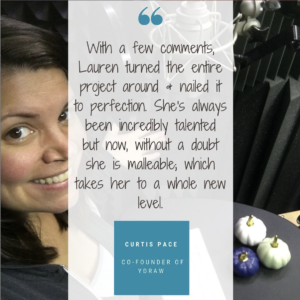
To round off the context you’re giving your website reader and prospective clients, testimonials and a client list are a great method. As much as it might seem tempting, don’t embellish here. In the modern age, it’s very easy to figure out if you really are the voice for this or that product, particularly for a larger brand or campaign. Not only will you look fake if you do this, you’ll also damage your reputation, and make people less likely to hire you. People don’t forget this kind of thing, in the voiceover community. And if there’s one thing clients want to avoid these days it’s liability. If you’re lying on your website, what other false information might you share and to whom? The best way to get a good client list and testimonials is to do the best job you can with every job you do. Be kind, prompt, gracious, and you will stand out all on your own. Many of your client contacts will be happy to give you testimonials, especially if you have a good relationship you’ve already built by your actions. 

How to Ask for a Testimonial

If you feel intimidated by asking for a testimonial, here is an effective way that I’ve used in the past:

Give before you ask for something in return. Write one for your client first!

Dear Client,

I wanted to take it upon myself to write you a testimonial that you can use where ever you like: 

<<INSERT SHORT 3-5 LINE TESTIMONIAL OF YOUR CLIENT HERE>>

Then ask:

If you don’t mind, I’d love to feature you on my website/on my LinkedIn Profile/on Google reviews and get your feedback on my work in a testimonial. Would you mind writing a short 2-3 sentence review for me?

Feeling a little stuck on what to write? Here are some questions you can answer!

  • What made you pick me over someone else?
  • How did I positively add to the project?
  • What’s one thing did I do that made the end client super-happy?
  • Or what does it feel like working with me?

There are many things to consider when you’re putting together your voiceover website, but it, like many things in life, can be a case of keeping it simple. Worry first and foremost about keeping these essentials front and center and you will be ahead of the game. Combine that with a solid work ethic and quality work, and you’ll be at the head of the class in no time. 

Will AI Overtake the Voiceover Industry?

AI, Business, Voiceover Industry

Do you talk to Siri? Bixby? Alexa? Google? Your car GPS? The rise of AI voices in modern life is everywhere, and growing every day. We’ve come a long way from the early times of Speak-n’-Spell toys some of us remember from childhood. 

VO vs. AI

It’s not surprising that this has caused some concern in the voiceover industry. You’ll see group and forum threads all over the place sharing articles and worries about whether or not voice seekers will automate, sending us all out of business. 

Some people are up in arms about AI voices, especially after the news broke of actor Bev Standing finding her voice stolen by the app giant TikTok, where users could make her voice say anything they pleased. Bev was rightly very concerned about her personal brand, and also wanted to  be fairly compensated for use of her voice. She’d recorded speech audio for another company in China, and it was then transplanted for use of the app.

You’d think HAL-9000 was shutting the doors on all of us, given how some people are acting. 

Will AI Voices take your job away?

But let’s take it down to brass tacks. Do you need to worry about AI voices taking your job away? The short answer is no. 

  • The first thing to know is that in many cases, AI voices will create jobs, because in order to create the speech, technology has to begin from recorded phrases from a real person. 
  • The second thing to know is that AI voices are not capable of the kind of nuances most of us are. There are demonstrations that have shown sound-alike voices for various people. But the time intensive modeling needed for that is not going to be used for your average voiceover project. So for audiobooks, commercial work, and most genres, breathe easy and keep on keepin’ on. You’re not in any danger for quite some time to come. 

AI will continued to be used throughout industries

The long answer? If you’re in arenas where emotion and nuance are not the first worry of what you’re voicing, you may want to keep your eyes open. AI voices will find a home here sooner than anywhere else. Once producing them becomes cheaper than it is now, as the ‘libraries’ of recorded voices increase enough, some of this type of work will probably go non-human. IVR and e-learning are two easy examples of places where the conveying of information is the most important quality. It won’t happen tomorrow, but it is probably a good idea to broaden your base of clients. 

Change happens in voiceover as much as any other industry, and although these genres are the likeliest to be first affected, it doesn’t hurt to have back up plans no matter where you are. Many talents are old enough to remember the digital revolution, and the vast changes that were forced on the voiceover industry. In almost all genres of voiceover, most people work only from home, and no longer go to the studio for all their work.

Protect YOUR voice and usage

Overall, the biggest thing you want to watch out for is what you’re signing when you’re looking into larger voiceover jobs. When, how, and for how long does the company you’re working for get to use your voice? Are they going to be able to sell it to another company, one that creates AI? No matter where your feelings are about the subject, make sure that you know what and where your voice can be used. Unfortunately, these technology developments are likely to bring out people and companies operating in a unethical manner to gain voice prints. 

Enter Clubhouse. This audio chat app has exploded onto the pandemic scene, giving socialization starved people a place to chat with others. It’s made a lot of waves, since you can’t record your rooms through the app, but the app can record you. The TOS claims that this only occurs when there is a problem reported in one of the rooms, and that the audio is deleted either after the room closes, or when an investigation concludes. But given the gleeful data-scooping activities of every tech giant in existence, whether or not you can trust Clubhouse remains to be seen. 

Also, it’s good to note that even if you don’t use the app, they may have your information. Since the app is invitation only based, and it requires users to upload their entire contacts list in order to send out invitations, anyone you know could have already given the app your data. And, although the app has sent out news that they’re working to protect the privacy of their users, people are very inventive in their ways to circumvent these kinds of restrictions. In addition, more of Clubhouse’s TOS says that they are allowed to track and share your information without telling you and in whatever way they please. 

Technology is all around you and continues to evolve

But the reality is, Clubhouse is not the first to do this. We’re all giant data mines to the tech giants, including your smart devices at home. If you have an Alexa or a Google dot, they record you too. Be careful what devices you purchase and what you connect to. Be aware that you’re giving your voice and your data away for free, which is something that may contribute easily to the rise of AI voices. Whether or not you want to download that app or buy an Alexa is up to you, however, it’s important to know the real impacts of the technology that you’re buying. We are all passive products to the tech giant industry. 

Although AI voices are in no way an immediate threat, and will certainly generate new voiceover jobs as companies build their voice libraries, it’s important to keep in mind that we can help control this flow of voices by choosing with our dollars as well as what jobs we take. Another important aspect for those touting only the inflow of jobs into our industry is that once these libraries are built, the jobs will slow down drastically. 

Yes, companies may want to add new voices, or update the existing ones, but once they have enough data to build from, they aren’t going to need your input again. This is something that cannot, by definition, be a ‘repeat client.’ In addition, these libraries are not likely to be subject to use rules the same way audio from a commercial might be. Companies looking for voice libraries are not going to want to come back and pay for use so they’re going to be looking for perpetual rights. 

Real people can not be imitated…yet

Nuance, emotion, and realism are our best defenses against the AI revolution. The human ear wants to connect emotionally to those they listen to, and that’s not going away. This is our biggest protection against brands building artificial voices for their work, since it is not something they are able to duplicate, and will not be for a long time to come.

Nurture authentic relationships with your clients, and emphasize the human connection. You are the sum of your experiences, and this is reflected in the unique take your voice is simply by existing. You can help tell a brand story and connect customers to a feeling far better than any computer generated voice can. 

Just make sure that you’re keeping your eyes open, your business dynamic, and carefully read anything you sign yourself up for, and the AI revolution won’t rock your business boat for years to come. 

8 ways to Stay Positive during a Dry Spell

Business

VoiceNextDoor · LaurenMcCullough 8 ways to Stay Positive during a Dry Spell

We’ve all hit a dry spell here or there sometime along the way. Sometimes it just comes out of nowhere, totally unexpected. You’re humming along and then all of a sudden things slow way down. 

Sometimes, you face a quiet season with others in your industry, when certain sectors take a hit. 

And sometimes, the whole world faces something like a pandemic and everyone across the board feels the stress of it all. Even as we start to come out of this one, the reality is that dry spells happen. No matter what you do for work, you’re likely to hit a drought again. Whether it lasts for a few moments of mental exhaustion or for a longer period of drain and stress, here are a few tips to get you out of a rut and get you back in the groove again.  

1. Reach Out to New Clients

Sometimes exactly what you need is one of the hardest things to do. When you aren’t cranking out work, you have more time to get some marketing done. If you’re feeling like you’re in a funk, reaching out to new potential clients can re-energize you and get you motivated again. 

Filling the top of your sales funnel is a really efficient use of your time when things are slow. Marketing our own work is so often overlooked when we are busy. Take the time now to return to your old lists and make those connections. 

2. Update your demos

When was the last time you updated your demos or portfolio? Sometimes life, and business, just gets so busy, and it’s not long before our marketing materials become outdated. Do your materials reflect your current work? 

In every business and art, we evolve and grow every time. With every new project, we learn more and our craft develops. If you’re a voiceover talent like I am, your range may have changed as you work with new clients and on different projects. And your own voice may have changed over time as well. Do your current demos still sound like you?

Even if your demos are an accurate reflection of your voice, are they a full interpretation of your work? Now’s a great time to make sure you include all the industries and types of projects you are involved with. YouTube is a great place to keep your demos updated and relevant. 

3. Batch plan your marketing

You know all those blog posts you’ve been meaning to write and all the YouTube videos you’ve been meaning to create? Use this dry spell to batch plan, and create, your marketing content. 

Dry spells can certainly be disorienting in their lack of deadlines and open schedules, but that cleared calendar may be just what you need to finally crank out all that content you’ve been wanting to get to. 

Start by getting organized and making a plan. You can write out an editorial calendar or social media plan. 

4. Network with your community

Many of us have grown accustomed to working solo, remote from any teams. For those of us in the freelance world, that’s nothing new. We’ve been working from our home studios and other home set ups, even before the whole world went virtual. Even though it has worked well for me for a large portion of my career as a voice over actor, we all miss interacting with people. 

I look forward to getting back to my favorite voice over conferences, even while they are virtual. Here’s a list of events happening in 2021 if you’re looking for great places to connect with fellow voice talent. 

You don’t have to wait for an event or conference to roll around to connect with your community. Go through your inbox and email address book and start sending some messages. Who have you not talked to in years? Who have you grown apart from professionally? 

Another way to get out of a funk in business is to get outside. Start visiting some local shops and restaurants and start talking with people. Actual people. Say good morning, ask how business is going, start a conversation. Maybe you’ll land some leads, or maybe not. But maybe just the act of interacting with people will help bring a fresh perspective.

Not sure where to start? Head on over to LinkedIn and start saying hello. Are we connected there yet?

5. Take classes/coaching

Sometimes our dry spells come along with feeling stale or stuck in our business pursuits. Maybe you’re feeling worn down or burnt out by the pace of your industry lately. Or maybe your business has taken a hit and you need to pivot a bit 

During those dry spells, sometimes the best thing we can do is arm ourselves with more information. Learn a new digital skill or take your expertise to the next level. 

If you’re looking for more foundational changes, try out a business or life coach. Sometimes that outside perspective can help us see our business and our routines with better awareness and focus. 

However you choose to empower yourself, education in any form can help you unlock new doors, mentally and practically, to get back on track. 

6. Revisit your yearly goals

When’s the last time you looked at your goal list? Did you write one in January? Or maybe you created a vision board or a five year plan. 

Slower times in business is just the right time to revisit those goals. How well is it going? Are you on track or have the realities of business derailed you a bit?
You can use this time to make some plans. Break down your goals into smaller chunks. WHat can you do this quarter? This month? This week? Today?

Taking the time to plan out a path to your big goals takes time that you may not have when business is hopping. Use this time to strategize.

7. Read up on trends in the industry

When we’re head down in business, it’s easy to lose track of what’s cutting edge or up and coming in our industries. Using your down time to get caught up on what’s going can set you up to come out on the other side better prepared to meet market needs and stay ahead of the competition.

It can also help you feel empowered and in charge of charting your course, rather than just sitting back and waiting. You may even find something new you love. 

8. Schedule a vacation and enjoy it!

Yes, I’m going to say it. Take some time off. I know, it’s so countercultural. And really? Business advice that essentially means stepping away? That’s just crazy. But in reality, we so rarely take the time to do this. We never step away. We never unplug. 

And we need to. Use this downtime as a sign that it’s time to just relax and enjoy life. Spend real time with the people you love and get back to the things that really matter. You can return refreshed and ready to tackle business out of a place of rest. 

We always refer to being busy as a good problem in business, but sometimes those slow downs are just inevitable. And that doesn’t have to be a bad thing.

SPOTLIGHT: Women in VO Portrait | June Foray

History of Voiceover

When you sit down and read June Foray’s work biography, most people will take a tour through decades of beloved programs. Even if you weren’t born in the decades June did most of her work, you definitely heard her voice in reruns, she was just that prolific. The regular public wouldn’t know her name, but in the entertainment world she was well known for her extensive and diverse body of work. Her work was often compared to Mel Blanc, a virtuoso in his own right, but Chuck Jones, the legendary animator is often quoted as saying

“June Foray is not the female Mel Blanc.

Mel Blanc is the male June Foray.”

June’s work started very early in life, landing her on the radio at age 12, voicing an old woman. She was born in 1917 in Massachusetts, to a Jewish immigrant father and a Jewish descent mother. June’s speech  teacher had a radio program on a local station, and gave June some of her first experiences. Eventually her family moved to Los Angeles, and June continued her radio work there. By age 15 she had created her own radio program called “Lady Makebelieve” for which she was both writing and providing voices. 

June said about her early life,”My mother and father were artistic people. My mother was a singer and a pianist. They enjoyed the opera and the theater and movies. And so they would take us kids to all of the wonderful functions at the Bijou Theater in Springfield, Massachusetts. I wanted to be a stage actress. Then I could come home and impersonate all these people I had seen in the movies. I was an omnivorous reader as well. So, I memorized a lot of classics. The little old lady that I do actually with Tweety and Sylvester, I memorized lines from “The Old Woman Shows Her Medals”. It’s a play by J.M. Barrie. Oh my goodness, I just did so many impersonations of stars, and read William Shakespeare and Oscar Wilde and “The Importance of Being Ernest”. It was a very exciting life.” 

As she got older, she worked steadily in radio and stepped into on camera work from time to time, but her real expertise was in dialects, accents, and just voices in general. She worked for Disney as Lucifer the cat in Cinderella, for Hanna Barbera in the Jetsons and many other shows, the character of Granny in the classic Looney Tunes cartoons, and both Rocky and Natasha in the Rocky and Bullwinkle cartoon. Writing out her entire bio would be beyond the scope of this article, but scrolling through it is a who’s who of animation through the decades. 

Unfortunately, much of this work is uncredited, despite it’s breadth. June herself said “There were never any credits for voices. Walter Lantz was the first one who ever gave actors credit. And now that I think about it, and I look back and see these films I think ‘Who did this? Who did that? I wonder who did it?’ And I think everybody else feels the same way, and it’s a shame. All the in-betweeners, the animators, the directors, the writers, everybody got credit, but the actors didn’t. I guess we weren’t that important. Except we were.” 

And of course she was right. The actors are important. Not only for her fellow voice talent whom she could inspire with her example and talent, but also for the generations of children who grew up with her voice but without knowing her name. 

Bringing June onto Rocky and Bullwinkle was a fine example of the impact of her voice. Although the younger generations may not be as familiar with the antics of that Moose and Squirrel, the show had a cult following and was in reruns for years.

June said about her hiring for that show, “I had already been working at Disney and Warner Brothers, doing a multiplicity of voices. Jay Ward and Bill Scott had this wonderful idea of a moose and a squirrel. My agent called and said, ‘Have you ever heard of Jay Ward?’ and I said ‘No’. He said, ‘Well, he wants to take you to lunch.’ Jay knew precisely whom he wanted. Nobody ever auditioned. He just said, ‘I want June Foray’.” 

And he had her for both the villainous Natasha and the chipper and charming Rocky.

Rocky was a naive flying squirrel, who like Bullwinkle was often fooled by the costumes Boris and Natasha would wear, but the two heroes would always win out in the end. Interestingly, Rocky’s flight abilities started out only like gliding-as a real flying squirrel would-and ended with him able to fly like an airplane or Superman and stay airborne for long periods. The show would have fans and laughter for many years to come, despite having only 150 episodes. 

A major part of June’s life was her love of and support for animation. In the 1960’s she began a chapter of the International Animated Film Association in Hollywood, and later came up with the Annie Awards in 1972 because there were no awards specifically the celebration for animation. In 2007, she participated in the Association’s archive project for cartoon voices. She also sat on the Governor’s board of the motion picture association for two decades, lobbying for an animation-specific award to be added to the Academy Awards. In 2001, they added The Academy Award for Best Animated feature in response to her petitioning. 

June also had a lot to say about the modern trend of putting “big names” in animated movies to gain viewers. “We are all doing supplementary parts while Cameron Diaz is getting paid $10 million. The stars receive millions of dollars for doing voices for animated films, and then there is the poor actor who has to struggle to make at least $15,000 a year just to keep his benefits. A lot of the young people–wonderful, good, solid voice actors–have families and are buying homes, and work is bad for them. Frankly, I don’t think simply because a star’s name is on it that is going to sell the film if it’s not good. You get big stars doing live-action films, and if it’s a flop, their appearance doesn’t alter the basic outcome.” 

Like many actors from the golden age of animation, June worked until almost the end of her life. She continued to work on some of her classic roles in new shows, like the character of Granny from Looney Tunes, and many other roles. In 2015, June suffered injuries in a car accident, and her health declined until her death in 2017. She was 99 years old, and was less than two months before her 100th birthday. 

I invite you to revisit some of June’s work, and share it with those in your life who may not know the story about the woman who brought so many iconic voices to life.

Finding The Right Diverse Voice For Political Ads

Casting, Political

When you are producing political ads for your next campaign cycle, it may be time to look for a new voice–or in some cases, new voices.

It’s important to find voices that not only represent your current constituency and likely voters, but also the diversity in your voting area. Using a diverse range of voices, and even some new voices, can keep your campaign fresh and help your message resonate with a greater audience. This is especially true if you are a new candidate or have a new message. Breaking into a community that has historically voted a certain way or for a certain type of candidate can be daunting, but a plethora of voices in your campaign messaging can help you break ground.

Why The Right Voice Matters

But how do you go about finding that voice talent? Here’s the thing. You don’t want to just grab someone from your campaign that looks the part and can maybe pull it off. You need professional talent that can speak consistently throughout your campaign messaging and can deliver your message clearly, concisely, and cleanly in your video ads. 

You also want someone whose voice really reflects the tone that you need in your message. There are positive, upbeat, hopeful political campaign videos that share an exciting view of the future and change to come; and there are negative, attack videos that highlight the reasons not to vote for your opponents. Each message has a very specific purpose. A professional voice actor can help you truly broadcast that purpose in tone and demeanor so that the hearers get it, not just in the words, but in the emotion and connection with the video. 

How To Find A Diversity Of Voice Actors For Your Campaign

Okay, so you get it. You need more voices in your campaign. Maybe there’s a target audience that you want your message to resonate with. Maybe there’s a niche that no one else is talking to. Maybe it’s just time for more voices to be heard. (We certainly think it’s that time.)

There are so many places to find great actors of diverse backgrounds and experiences, if you just go looking. That’s my first suggestion. Be willing to look. Be willing to work with new agents or new organizations. Don’t just keep turning back to the same sources that you always have. If now is the time for change, that starts with small changes—like being willing to hire voices you’ve never hired before. Take a chance. 

Second, I have a number of great resources for you:

  • BlueWave Voiceover is a great place to start for diversity of progressive voices. There’s a database of different voice talents that you can search if you’re looking for something specific. They specialize in working with Democratic and progressive voices. 
  • The African-American Voice Actor Database has been around since 2019 and is a great place to turn if you want to highlight Black voices. Now more than ever, I encourage you to turn here for new voices to liven up your campaign ads. 
  • Voquent has a sample database of non-binary voices, which are not only under-represented, but according to this article, bring a certain distinctive quality that can perk up a listener’s ears and help them tune in a little longer. 
  • If that wasn’t enough, here’s a spreadsheet developed by Edward Hong that showcases literally hundreds of BIPOC voice talent with a wide range of accents and native languages.  

Choosing a Millennial Voice 

The millennial vote has been a topic of much discussion over the last number of election cycles. It’s a politically active and engaged generation that has recently begun aging from the “youth” vote to the young professional vote, with growing families. While their engagement continues, their concern for the future, for the sake of their children and their careers, grows. On one hand, millennials have now peaked in their numbers of electorate voters, with GenZ now the up and comers. 

But now is not the time to overlook the Millennial voice. As mentioned, Millennials are very engaged in the world around them and many times are not necessarily beholden to one candidate, but rather to a cause or a message, according to this article. Speaking to their concerns, in a Millennial voice, can be a way to connect with that voter base and help them see that your cause is their cause. 

Furthermore, while the numbers aren’t growing in those now eligible to vote by turning 18 (as we leave that to GenZ), there is a bump in growth in naturalized Millennials becoming citizens. In other words, the Millennial electorate is becoming more diverse. And the Millennial voice is therefore becoming more diverse. Have I convinced you yet that now is the time to hire from the databases I shared above?

https://www.laurenmccullough.com/wp-content/uploads/2020/08/Political-Millennial-Vote.mp4

Is It Just Acting?


When it comes to politics, we all have our own convictions on particular issues and particular candidates. So as I mentioned above, there are certain databases where you can find actors who work specifically with one type of political leaning or the other. 

On the other hand, you will find some actors say that it’s acting and they are equal opportunists. Here’s an interview from the Today Show with a couple of voice actors who worked on national campaigns in the 2016 and prior. This article makes the same argument. 

However you will note that the hook of these articles is “here are the voices you’ve always heard but didn’t know.” That’s fine and rather interesting. 

But I want to make a different plea. Maybe it’s time for the voices you’ve always known but haven’t heard. Maybe it’s time to shake things up. It may take some time to find a voice actor who connects with your viewpoints, while reflecting the diversity that your campaign needs, but that time is a worthy investment. There are a wide range of voices in every camp. It’s time to find them and hire them. They deserve it, and we want to hear from them. 

  • « Go to Previous Page
  • Page 1
  • Page 2
  • Page 3

Primary Sidebar

LISTEN


https://www.laurenmccullough.com/wp-content/uploads/2020/03/Lauren-McCullough-Commercial-Demo.mp3


Corporate
https://www.laurenmccullough.com/wp-content/uploads/2020/03/Lauren-McCullough-Corporate.mp3


eLearning
https://www.laurenmccullough.com/wp-content/uploads/2020/03/Lauren-McCullough-eLearning.mp3

SUBSCRIBE!

Click here to sign up for
a low-volume newsletter

Recent Posts

  • Tips to write a storytelling ad
  • Why Voiceover Communities Matter
  • Tips For Creating The Best On-Hold Messages
  • Does Professional Voiceover Help Sell Products?
  • 9 Ways to Keep Moving when You Work from Home

Categories

Archives

Follow LAUREN!

©2026 Lauren McCullough // Voice Over Site by Voice Actor Websites