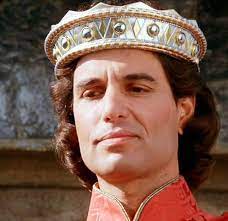
 If you’ve ever watched the classic movie The Princess Bride, you can’t forget the villainous Prince Humperdinck. He slimes his way through the movie, providing the perfect haughty foil to the heroes, and gets his just desserts in the most appropriate manner. He’s an excellent example of the kind of villain people love to hate.
The Man Behind the Sneer
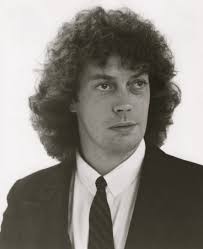
Chris Sarandon was born in Berkley, West Virginia. He was the son of Greek restaurateur parents. Chris Sarandon and Cliffie. He jumped into performing in high school, playing in a band called the Teen Tones. His band toured after high school and backed up various acts like Bobby Darin, Gene Vincent and Danny and the Juniors. College landed Chris at West Virginia University where he got a degree in speech, graduating magna cum laude. He continued to perform, appearing in productions like Music Man as Harold Hill. Chris took his education to a further level, deciding to pursue a masters at Catholic University of America in Washington D.C.. There he majored in theatre, and met his first wife Susan Sarandon. He scored his professional debut in The Rose Tattoo in 1965. Chris and Sarah were then married in 1967. Chris did some regional theatre and worked with some improv troupes before the couple moved to New York in 1968.
Bright Lights and Creepy Characters
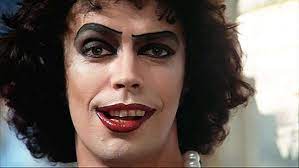
 New York brought Chris a television debut on the long running series, the Guiding Light. He played Dr. Tom Halverson in 1973-1974. During the remainder of the 1970’s, Chris was astonishingly busy, both making movies and appearing in plays. Shakespeare and Shaw festivals took him all over the US and Canada. As for the silver screen, Chris debuted in Dog Day Afternoon in 1975 alongside Al Pacino, a thriller Lipstick in 1976, then a demon in The Sentinel in 1977. He expanded his range with the role of Christ in The Day Christ died, a TV movie, and two very different characters in A Tale of Two Cities. By the end of the decade, he and Susan had divorced and he remarried model Lisa Ann Cooper.
The 1980’s and A Different Kind of Prince
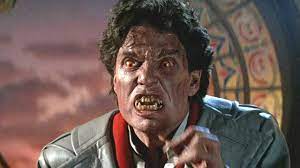 The new decade brought Chris more movie roles, opposite Goldie Hawn in Protocol, 1984, and a vampire next door in Fright Night 1985. Chris added another TV movie, Liberty, to his credit in 1986, which covered the development of the Statue of Liberty. His best known movie role was his next one, 1987’s The Princess Bride’s Prince Humperdinck. Chris didn’t stop there, adding on another classic horror film, playing an investigating cop in the original Chucky movie in 1988. The decade also brought Chris 3 children with Lisa, Stephanie, Alexis, and Michael.
The 1990s and Pumpkin King
As time passed into the 1990’s, Chris also divorced again, marrying his current wife, actress and director Joanna Gleason. She is best known for her role as the Baker’s Wife in the musical Into the Woods. She is also the daughter of Monty Hall, of Let’s Make a Deal fame. The two met on the set of the musical Nick and Nora, 1991. 1993 brought Chris his biggest role, Jack Skellington in the surprise hit, The Nightmare Before Christmas.
 Director Tim Burton was working for Disney as an animator when he first developed the poem that became the genesis for the film. He drew inspiration from the old holiday specials like How The Grinch Stole Christmas, and Rudolph the Red Nosed Reindeer, as well as the poem, A Visit from St. Nicholas. Burton’s first idea was to create a 30-minute television special, with the narration spoken by the unforgettable Vincent Prince.
He also considered a children’s book as a possible project. Burton began to create storyboards and concept art to flesh out his story and he and other animators at the Disney created character models for their budding idea. When the men pitched it to Disney, they considered the idea, then rejected it as being ‘too quirky’. Burton was subsequently fired, and went on to direct Beetlejuice and Batman for Warner Brothers. Burton discovered in 1990 that Disney still owned the rights for the film. Disney has a clause in its contract that any art or concepts created by their animators belong to the company during the time they are working for the Monolithic Mouse.
After his commercial successes, Disney was willing to make a feature film with Burton out of the project. Disney chose to release it via Touchstone Pictures at first, believing it was ‘too creepy’ for their mainline children’s audience. Danny Elfman wrote the songs for the movie, and was cast as Jack’s singing voice. Chris was brought in to match his tone in a speaking voice. They considered having Chris sing as well, but he was unable to fit in singing lessons before the production began.
Chris reprised his role in the Kingdom Hearts videogames, the Disney Infinity video game and a Capcom movie sequel called Oogie’s Revenge. He also was featured in several special Halloween themed events at Disney World itself.
And He Just Keeps Going!
 The rest of the 1990’s brought Chris and Joanna some opportunities to appear together, both onstage and in the movies. They appeared in Eddie &Pen in 1996, American Perfekt in 1997, the stage production Thorn and Bloom in 1998, and the movie Let the Devil Wear Black in 1999. He has continued to grace stage, screen, and movies, with a blizzard of appearances into the new millennium, including roles onstage in The Light in the Piazza, Cyrano de Bergerac, Through a Glass Darkly and The Exonerated.
In the 2015 production of “Preludes,” he played multiple roles that included Chekhov, Tchaikovsky and Tolstoy. He has also appeared in various films with featured parts in Perfume 2001, Loggerheads 2005, My Sassy Girl 2008, a cameo as a vampire victim in a remake of Fright Night 2011, Safe 2012 and Frank the Bastard 2013, Big Stone Gap 2014 and I Smile Back 2015.
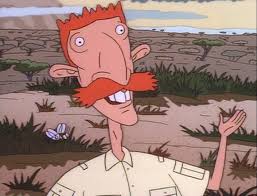
Numerous TV show appearances including: ER, Charmed, Cold Case, Judging Amy, Law and Order, The Good Wife, Orange Is the New Black and as the voice of Dracula in Teenage Mutant Ninja Turtles. He has also done voice work for The Wild Thornberry’s, appearing as Myka the penguin, Adventures from the Book of Virtues as Jim Dellignham Young, and The Chosen one as Zebulon ‘Zeb’ Kirk. In his many decades of performance, there has rarely been a year where Chris was not working, and most of the time in more than a single production at a time.
Chris has said about acting, “Being on stage is a seductive lifestyle. My advice to aspiring actors is think twice. People sometimes go into acting for the wrong reasons – as a shortcut to fame and fortune. If these goals are not attained, they feel a bitter disappointment. Acting should be an end in itself.” and “As an actor, we are, in a way, a mirror of other people.”
 So, your product is up for a refresher. You’ve got ads, and marketing, and you’re looking for that needed brand voice. Traditionally, many companies have chosen men for these roles to produce a strong, authoritative voice for products, but ask any Mom… women know how to use a strong, authoritative voice when needed. So while breaking from traditional casting of men in those roles may feel counter intuitive, it’s possible a woman’s voice will give your product or sales new life.
 So, as you can see, although a woman’s voice isn’t the right decision for every brand and product, there are many positive elements going with that choice. Diversity and inclusion are the way the world is moving, and brands putting a woman’s voice out front have a head start to go along with it. And time will show that the sales come right along.
  So the first thing I need to recommend about when to outsource your editing is a mindset change. It’s understandable that when beginning a voiceover business, money can be at a premium. Between classes, equipment, coaching, and marketing, there’s a hefty dollar cost before the money comes flowing in. Any additional expenses can feel dangerous or maybe unneeded. Jobs you get at first may not have ideal rates or client relationships. In fact, there is some benefit early on in your career as a voice actor to editing your own work because it’s a crash course in audio production.
 Finances ROI/income
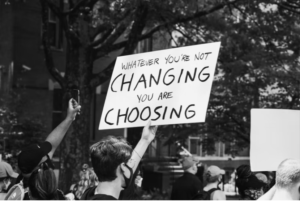 he business world has gone through some significant shake ups with social movements in the recent past. #MeToo shed light on the way that so many women have been treated. Black Lives Matter has lifted up Black voices and shown how much they are hurt and harmed. The killings of Asian people in connection with COVID-19 related racism. The striving and sacrifice of Native American water protectors fighting to keep their lands clean. Mexican and South American families getting ripped apart in a hideous border policy. All of these movements and many others have intertwined with social media. And being connected with social media means that the companies who interact with those groups are also in the spotlight.
  Here’s the thing. Even if you don’t understand why people are riled up, and what all of these folks mean, diversity is the way of the future. The planet is changing, and mass movements of people are only going to continue as time passes, meaning more diversity and mixture of folks. It can be hard and complex to take a good look at yourself and your company, and the way that you interact with BIPOC employees and outside people. It is uncomfortable to hear, and may make you or others in your organization feel very defensive.But making an effort to foster real, top down change will set you up for success both now and in the future. In addition, you’ll be giving yourself a far wider scope to find truly perfect people for your company. It’s a well documented fact how many organizations avoid ‘ethnic’ names on resumes. You may not even realize that you do it! That’s how sneaky internal biases can be. Or if the company does hire a BIPOC candidate, they’re the only one in the office. Show the kind of values you can be proud of both inside and outside your organization and look for the kind of people you’d overlook before.
  One of the first things to learn is why being colorblind is wrong. That probably feels strange to read. Most white folks were taught as kids that we should “not see color” and just treat everyone the same. But the reality is when we are ignoring color, we are missing the unique challenges and pains that BIPOC are going through. Justice and good values means that instead of colorblindness-equality, we should strive for equity.
  It’s not possible for white people to completely understand the BIPOC experience. Sadly, the kind of hurts that those types of actions can cause are things that get dismissed far too often. You don’t have to understand how someone is feeling to accept that they are being hurt–and that is the core of what can help people understand the kinds of changes needed. Company values should be to encourage understanding and cultural exchange, but to accept that regardless, if someone says ‘please don’t do this’, to accept and move on. This is also a conversation that will never truly be over. Race is an extremely complex issue, and the nuances of policy and company life will always need revisions to greater understanding.
  The most important thing about these actions, both internal and external in your company, is truth. These days people care about companies doing what they say they will, and displaying their values in action as well as with words. If you make a big statement about making diversity a part of your company, actually make the change. News and information can leak out any time and anywhere, and with how easy it is to be anonymous, you can never stop it. (You’ll look even worse if you try.) Whether it’s internal experiences as an employee, or an external one as a customer, when you don’t take action, people will notice. And the longer it takes for any real action to occur, the more people will notice. That’s the way that reputations are changing as time passes. Make the changes now, and stand up for what’s right, and make it top down truth.
  There’s an old saying in business, “you have to spend money to make money.” This is very true in voiceover, where the tools of your trade and the training to back it up cost a great deal before you’re at a ‘pro’ level. Your voice and the sound put out of your studio is your product, and in order to make it sound the best, you’ve got to polish and fine tune even the best set of pipes.
  1. Facebook– The grand blue monolith of social media has a great many groups related to voiceover. Unfortunately, some of them are not worth your time. If you see groups with little to no activity, or they are dominated by ads, you should probably move on. Here’s a curated list of a few valuable places to start. If you’re interested in audiobooks

 “Anticip-”